


Introduction
In the early days of a business, stock management may sound boring at first. However, it serves as the heartbeat of your operations and can make or break a growing company. This smart management system helps businesses stay efficient and competitive as they expand. This guide is specifically designed for users seeking to run a small startup or scale a growing enterprise. It covers what stock management really means, why it matters for small businesses, potential challenges, effective implementation strategies (steps), and the best online software to choose.
Introduction to Stock Management: Simple Definition & Core Purpose
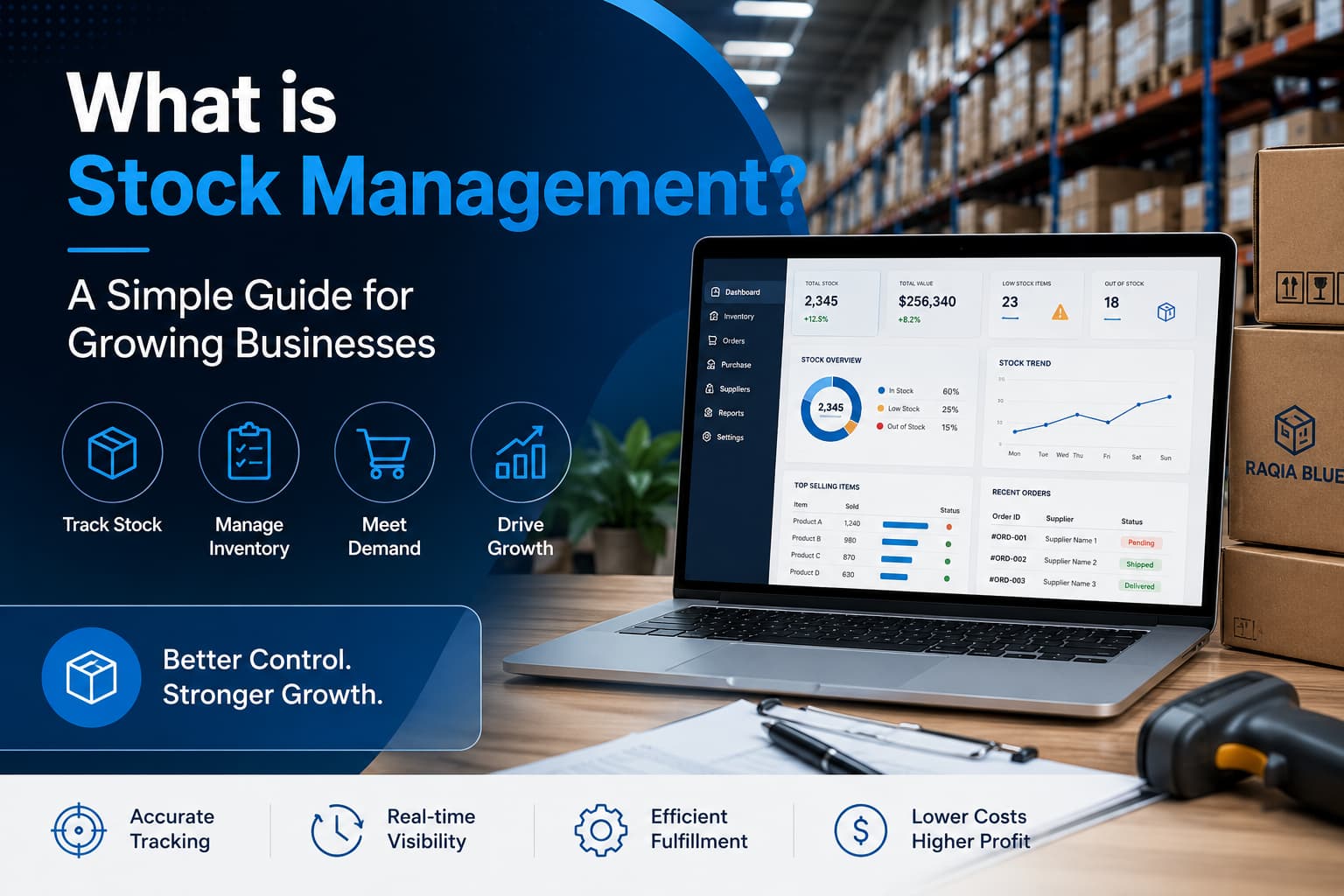
Stock management (also called inventory management) is the process of ordering, storing, tracking, and using a company’s inventory. This system includes raw materials, components, finished products, and the warehousing and processing of such items. Stock management is a balancing act that ensures a business has the right stock in the right place, at the right time.
The core purpose of stock management is to maximize efficiency and minimize costs. It serves as the bridge between supply and demand, ensuring the customer’s journey ends with a fulfilled order. In simpler terms, stock management is a foundational process that tracks product availability, location, turnover, and replenishment needs.
The Significance of Stock Management for Growing Businesses
For a business in its growth phase, stock management plays a significant role. While marketing brings customers to the door, it is the inventory system that ensures they don’t leave empty-handed. Fundamentally, good management directly affects cash flow, customer trust, and operational efficiency. As businesses grow, the number of products, orders, and customer expectations usually increases.
Also, in an era of next-day delivery expectations, a growing business cannot afford the reputational damage caused by inaccurate in-stock statuses. This is why smart inventory management becomes more significant. Furthermore, from an operational efficiency perspective, balanced stock levels reduce confusion across purchasing, storage, fulfilment, and reporting.
Potential Challenges of Stock Management: Mistakes Growing Businesses Should Avoid
As businesses scale, they often fall into predictable traps that can stall their momentum. Below are the most common challenges a business faces and mistakes to avoid.
- Overstocking
This happens when a business buys more than it can sell in a reasonable time. It leads to wasted space, tied-up cash, and sometimes markdowns.
- Stockouts
This happens when a product runs out completely. It can lead to unhappy customers, missed sales, and damage to your brand.
- Inaccurate Counts
The system may show 20 items in stock, but only 12 are actually there. This can happen due to theft, damage, missed entries, or counting mistakes.
- Poor Forecasting
Some businesses order based on guesswork instead of real data. That can cause major problems during busy seasons or slow periods.
- Weak Supplier Coordination
Late deliveries, poor communication, or unreliable suppliers can throw off the whole stock plan. The tricky part is that these issues often build up slowly. By the time they become obvious, the business may already be losing money.
Manual vs. AI-Driven Stock Management: Using Technology to Scale Growing Business
The gap between manual and AI-driven management is widening. Manual stock management typically relies on spreadsheets, physical counts, and manual updates. While this approach may be affordable for small-scale businesses, it becomes difficult to maintain as operations grow. Manual systems are also slower, more prone to error, and harder to scale.
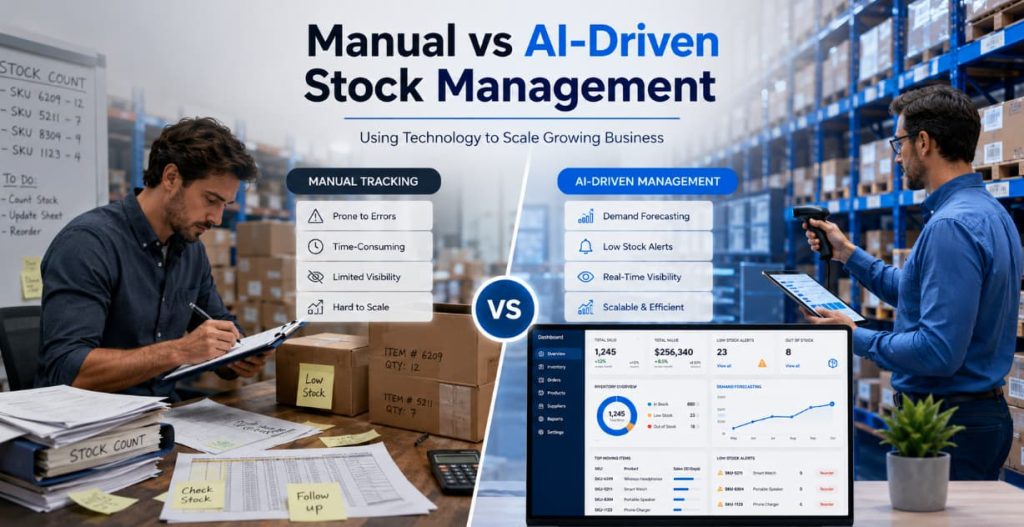
AI-driven stock management, on the other hand, offers a more advanced and scalable solution. Instead of simply recording inventory numbers, AI-powered systems analyze patterns, predict demand, identify stock risks, and automate routine decisions. This helps businesses respond more quickly and accurately to changing market conditions. With technology support, growing businesses can reduce guesswork and gain greater control over stock performance.
How Small Businesses Can Start Stock Management? A Step-by-Step Guide
For growing businesses, simple systems are often the best starting point. You do not need to be fancy. You just need to be consistent. Are you starting from scratch? Follow the given simple path:
Step 1: List Every Product
Create a comprehensive stock list with product names, codes, sizes, colors, and other relevant details.
Step 2: Count What You Have
Conduct a full stock count to ensure your records match reality.
Step 3: Organize Storage Areas
Group products clearly and label shelves or bins.
Step 4: Choose a Tracking Method
Start with a spreadsheet if needed, but move to software when growth makes manual tracking too hard.
Step 5: Set Minimum Stock Levels
Decide when each product should be reordered.
Step 6: Review Sales Patterns
Look at which items sell quickly and which do not.
Step 7: Improve Over Time
Stock management is not a one-time setup. Review, adjust, and refine your system regularly.
Choose Smart: Choose Raqia Blue
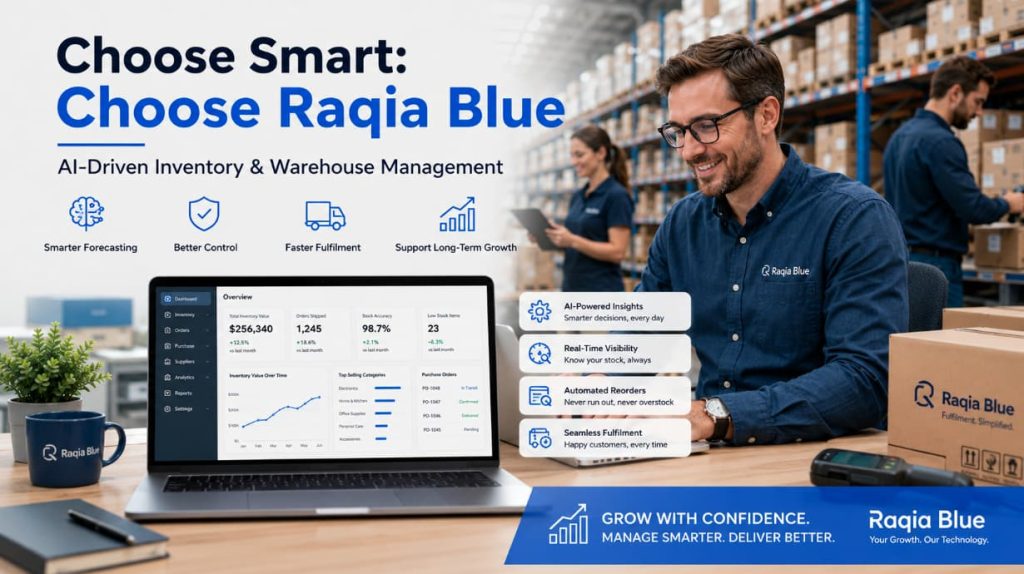
When it comes to scaling your business, you need a partner that understands the nuances of growth. Raqia Blue is a smart choice designed specifically to take the complexity out of stock management. It is a data-driven approach that offers smart support for growing companies to stay competitive. Raqia Blue is a guided, AI-driven inventory and warehouse management software that transforms stock management from a routine task into a strategic advantage. Choosing Raqia Blue means choosing a modern solution that supports growth, efficiency, and long-term success.
Final Thoughts
Stock management is a foundation of building a successful, growing business. It helps maintain product availability, control costs, improve customer satisfaction, and support better decisions. As you look to transition from manual chaos to streamlined precision, the right tool is essential. Raqia Blue stands out as the premier choice for businesses that want to scale intelligently. So don’t wait and start managing your inventory the simple way with Raqia Blue.